
Authentic Tanzania Safari Professionals
More than two million animals move across the endless Serengeti plains in one extraordinary natural cycle. From the dramatic calving season in the south to the thrilling river crossings in the north, experience the world’s greatest wildlife spectacle with Sereti Wilderness Safaris.
The Great Wildebeest Migration is not a single moment, but an endless circular journey across the vast Serengeti-Mara ecosystem. Guided by seasonal rains, fresh grazing, and water sources, more than 1.5 million wildebeests, 200,000 zebras, and hundreds of thousands of gazelles move across nearly 800 kilometers in one of nature’s most extraordinary wildlife spectacles.
From dramatic river crossings and predator encounters to the peaceful calving season on the southern plains, the migration represents a continuous cycle of survival, movement, and renewal. Experience this breathtaking natural wonder with Nas Royal Safaris and witness Africa’s greatest wildlife adventure unfold across the Serengeti.
The migration herds settle across the fertile short-grass plains of the southern Serengeti and the Ngorongoro Conservation Area, where nutrient-rich grazing creates ideal conditions for newborn wildlife.
The Spectacle:
More than 500,000 wildebeest calves are born within a concentrated two-to-three-week period, creating one of the most remarkable wildlife events in Africa.
Predator Action
This season offers exceptional predator activity as lions, cheetahs, hyenas, and other carnivores take advantage of the vulnerable young calves across the open plains.
Nas Royal Tip:
Stay in the Ndutu region with Nas royal Safaris for front-row access to the calving grounds and intimate views of the nursery herds.
As the southern plains begin to dry, the migration gradually moves northwest toward the Central Serengeti and the famous Seronera Valley.
The Landscape:
The long rains transform the Serengeti into a lush green wilderness filled with dramatic skies, vibrant grasslands, and flowing rivers.
The Vibe
Known as the “Green Season,” this period offers quieter safari experiences with fewer vehicles, excellent birdwatching, and outstanding photography opportunities in soft natural light.
The migration gains momentum as massive herds push toward the Western Corridor and the Grumeti River region.
The Crossings
During this period, visitors may witness dramatic Grumeti River crossings where wildebeests brave powerful currents and enormous Nile crocodiles waiting beneath the water.
Mating Season
June also marks the beginning of the wildebeest rut, when territorial males compete for dominance with loud grunting displays echoing across the plains.
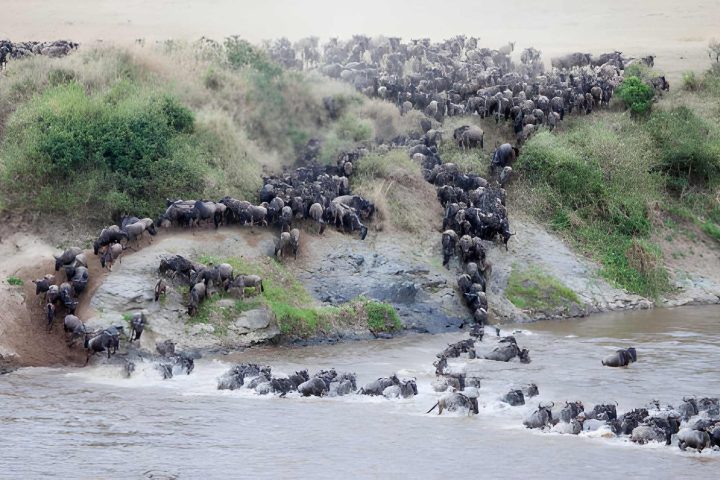
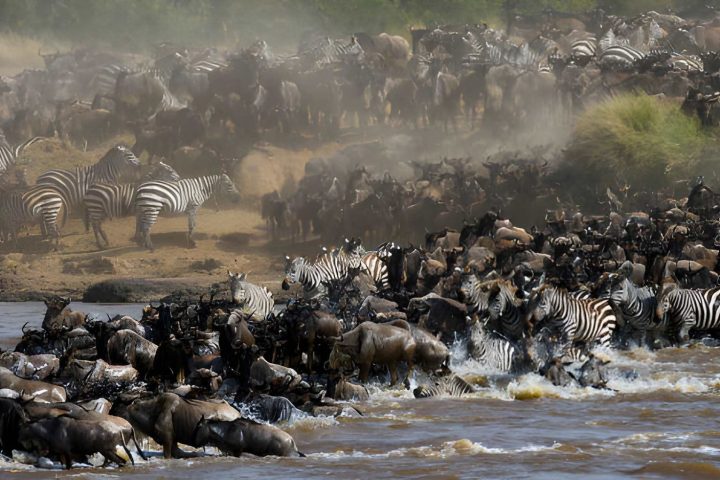
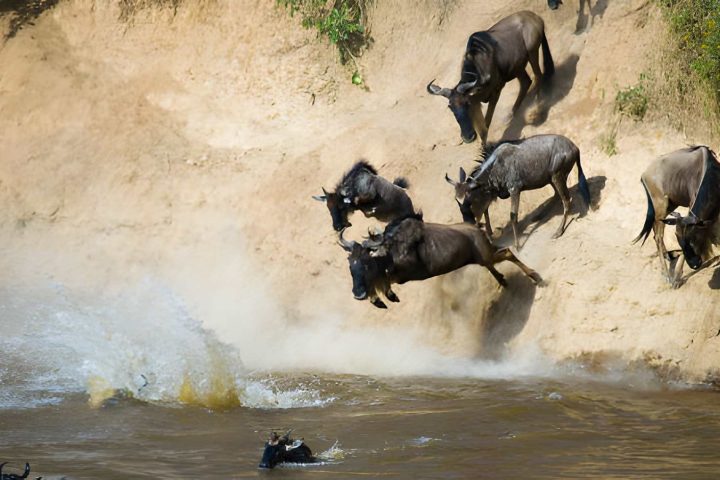
This is the most dramatic phase of the migration as the herds arrive at the dangerous Mara River in the Northern Serengeti.
The Challenge
Thousands of wildebeests gather nervously along the riverbanks, often waiting hours or days before the first animals leap into crocodile-filled waters.
The Maasai Mara
Successful herds continue north into Kenya’s Maasai Mara, where fresh grazing supports the migration during the dry season months.
2026 Strategy
This is the busiest safari season of the year, and early booking with Nas Royal Safaris is highly recommended for the best accommodations and prime river-crossing experiences.
As the short rains begin across the southern plains, the migration turns southward through the eastern Serengeti in search of fresh grass and new grazing opportunities.
The Movement South
The herds travel quickly across the open savannah, completing the final stage of their endless annual cycle before returning once again to the southern calving grounds.
To help you plan your Nas Royal Safaris use this table to align your travel goals with the movement of the herds.
| Phase | Primary Location | Best For | Typical Climate |
|---|---|---|---|
| Calving | South Serengeti / Ndutu | High predator activity & newborns | Hot and dry mornings |
| The Rut | Western Corridor | Large herd movements & mating | Humid / Occasional rains |
| Crossings | North Serengeti / Kogatende | Dramatic river crossings | Dry, dusty, and clear |
| Grazing | Maasai Mara | Vast vistas and photography | Mild and pleasant |
Contact the Nas Royal Safaris team to begin planning your unforgettable 2026 safari adventure. Our experienced travel specialists are ready to help you create the ultimate Great Migration itinerary tailored to your travel style, interests, and dream wildlife experiences.
Pin Up App Download APK for Android and iOS Only 3,0 MB The user-friendly interface
Best casino online overview and options for Australian players Yes — casino payment methods are
Speaking of integration, that’s another area where ServiceNow App Engine shines. The tight alignment with the
Pin Up App Download APK for Android and iOS Only 3,0 MB The App includes
Unlike centralized clouds, which deliver services from servers located in a specific, centralized location, distributed
Online spelsajter har genomgått en väsentlig utveckling under det färska decenniet, med en tillväxt av